CNR
BRIEF DESCRIPTION OF THE INSTITUTION AND OF THE RESEARCH GROUP
The National Research Council (CNR) of Italy is the research institution coordinating the S4G project. The CNR is the largest public research institution in Italy performing multidisciplinary activities. CNR’s mission is to perform research in its own Institutes, to promote innovation and competitiveness of the national industrial system, to promote the internationalization of the national research system, to provide technologies and solutions to emerging public and private needs, to advice Government and other public bodies, and to contribute to the qualification of human resources.
The S4G research team belongs to the Institute for Sustainable Plant Protection (IPSP) of the CNR whose focus is the study of plant responses to biotic and abiotic stress factors, with the aim of identifying resistance mechanisms, adaptation processes, and protection strategies to promote plant health in agriculture and forestry. The research activities are addressed to i) enhancing the biodiversity of plants of agricultural and forestry interest, ii) strengthening the use of natural enemies and beneficial microorganisms in integrated pest management approaches, iii) selecting and recovering valuable plant germplasm, iv) identifying biomolecules of agricultural or industrial interest, and ultimately v) promoting a sustainable and environmentally friendly growth. Particularly, the S4G research team is constituted by 4 researchers (Drs. Giorgio Gambino, Paolo Boccacci, Chiara Pagliarani, and Irene Perrone), a research fellow (Dr. Amedeo Moine), and a technician (Dr. Andrea Delliri). All the S4G members work at the IPSP in the ‘Functional genomics and Eco-physiology group’. Their scientific activity is focused on grapevine, hazelnut and olive tree species and it is mainly related to the following topics:
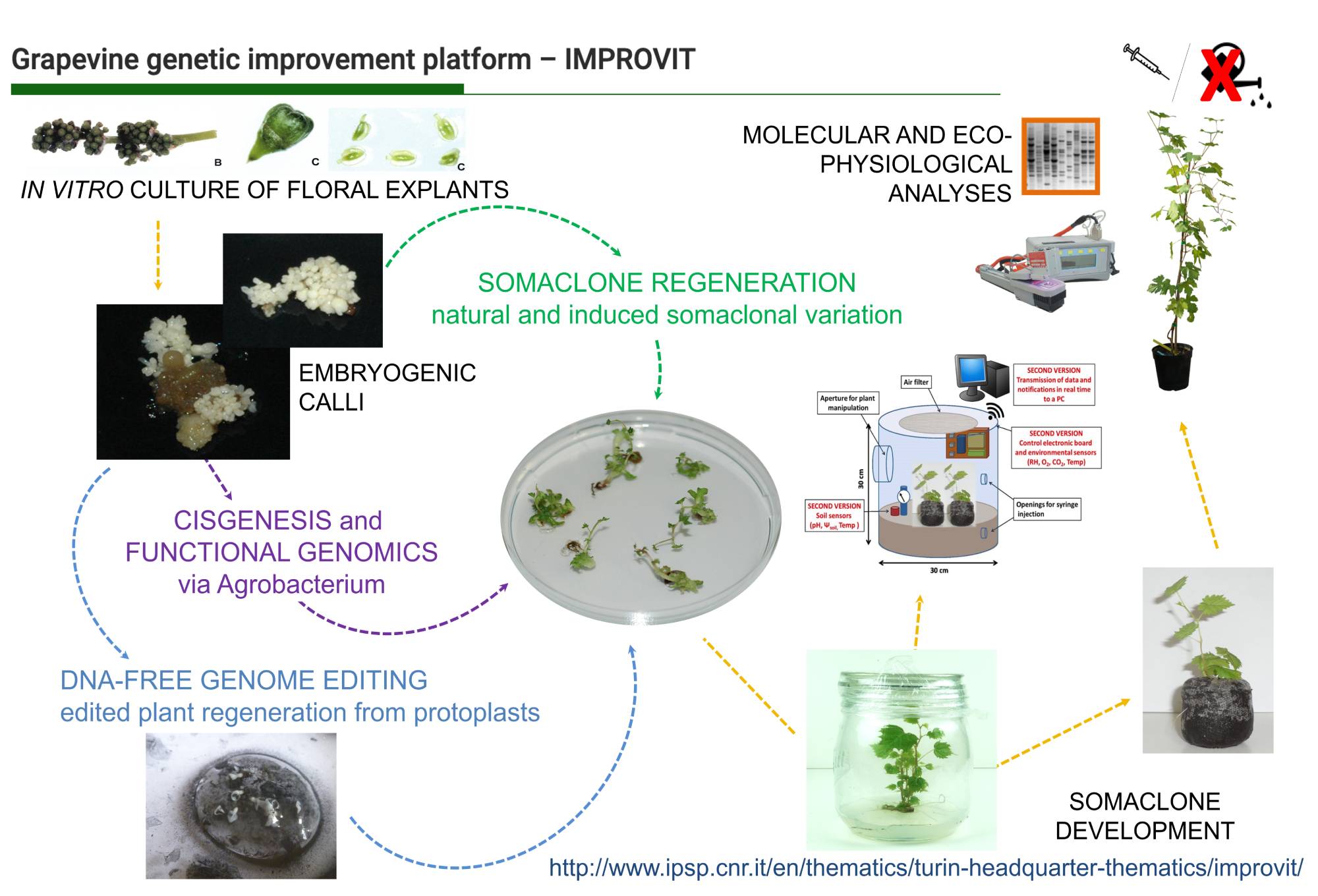
- New breeding techniques (cisgenesis, gene editing) in grapevine and olive tree, and traditional breeding approaches in hazelnut.
- Somatic embryogenesis for mutagenesis and elimination of viruses and viroids.
- Study of plant responses to environmental stresses (biotic and abiotic), with specific attention to the physiological and molecular mechanisms either triggering or regulating these processes. This specific activity is addressed to support and empower breeding programs for the selection of new crop genotypes with enhanced adaptability to ongoing climate changes.
- Genetic transformation of grapevine and model plants for functional studies.
- Varietal identification and management of the germplasm collections; selection and recovery of valuable germplasm and protection of biodiversity (grapevine); population genetics studies (grapevine, hazelnut)
- Traceability of the grapevine propagation material, musts and wines using molecular markers (SNPs).
DESCRIPTION OF THE PARTNER’S CONTRIBUTION TO THE PROJECT
In the frame of the S4G project, the CNR research team is mainly involved in the WPs and Tasks detailed in the table below. In particular:
WP7. Dr. Giorgio Gambino, with the contribution of Drs Chiara Pagliarani and Irene Perrone, will supervise the project coordination and management.
WP1. In the context of the exploitation of grapevine biodiversity and identification of new traits of resilience to diseases, the CNR research team will perform a survey of the genetic resources available at the Grinzane-Cavour grapevine germplasm vineyard collection looking for interesting resilience traits. These interesting accessions together with the CNR collection of somaclones, mutated for biotic stress resilience, will be evaluated by controlled inoculations of fungal pathogens to select the most promising genotypes. The selected genotypes will also be tested for drought tolerance at the CNR greenhouse facilities. Moreover, CNR will focus on the molecular characterization of minor and local varieties of the Grinzane-Cavour collection showing interesting resilience features. The varieties and somaclonal lines emerging from all the activities above described will be further subject to multi-omics analyses and epigenome-wide association study (EWAS) to explore the molecular bases controlling the grapevine-pathogen cross talk.
WP2. The CNR research team will exploit two different approaches for developing new grapevine genotypes resilient to multiple fungal diseases. New Plant Breeding Techniques will be used to obtain tDNA-free-edited vines from protoplast regeneration, targeting genes involved in plant defense responses. Targets already known within the S4G Consortium will be used at first, but interesting traits emerging from the WP1 activities will be employed as well. In parallel, mutagenesis by somaclonal variation exploiting the genetic background of traditional cultivars will be implemented to produce somaclones resilient to biotic stresses and immediately exploitable in vineyard. Improved tolerance of edited plants and regenerated somaclones against PM/DM/GTD will be tested in greenhouse, and open field conditions in the case of somaclonal lines. At the end of the S4G project, the CNR is expected to release new grapevine genotypes resilient to multiple diseases.
The CNR is also involved, at different levels, in other WPs of the project. In WP3, the CNR will select at least one cultivar among the local/minor V. vinifera varieties tolerant to fungal diseases and the resilient somaclones planted in vineyard on which integrated pest management strategies will be applied. In the WP4, the CNR research team will contribute to Task 4.5, related with measuring consumer knowledge, acceptance, and perceptions towards reduced pesticides in viticulture, and in WP5 it will participate to organize educational field activities for knowledge exchange among the S4G Consortium partners and producers/advisors. Finally, in WP6 the CNR research group will be involved with all partners in the development of communication, dissemination, and exploitation activities.
| CNR Researchers | Role in the project | WP leadership | Task leadership |
|---|---|---|---|
| Dr. Giorgio Gambino | Coordinator | WP7 | Task7.1 |
| Dr. Paolo Boccacci | Team member | Task1.2 | |
| Dr. Chiara Pagliarani | Team member | Task2.3; Task7.3; Task7.5 | |
| Dr. Irene Perrone | Team member | WP2 | Task7.4; Task7.6 |
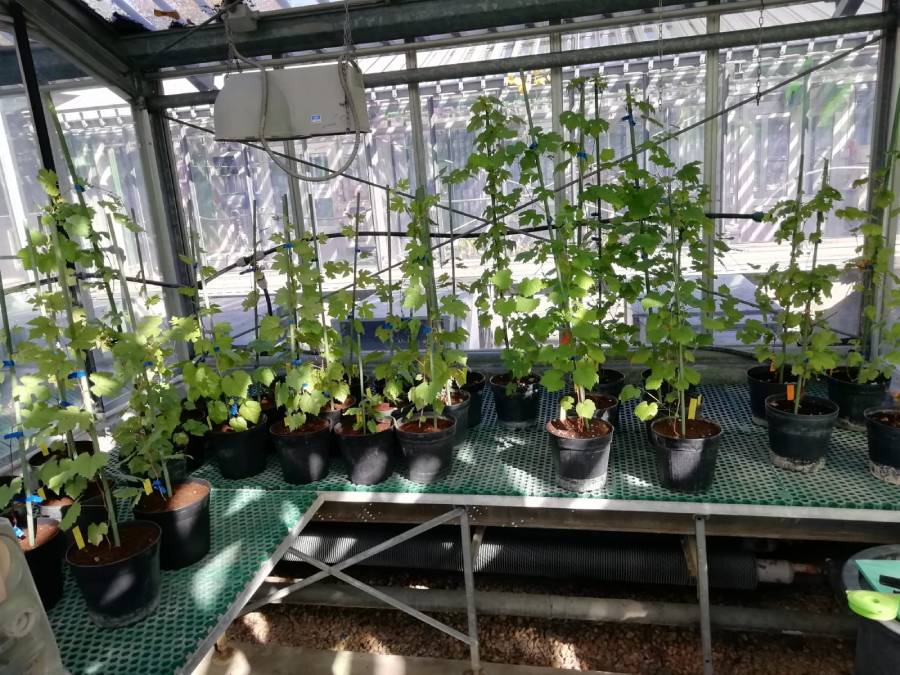
CNR grapevine somaclones
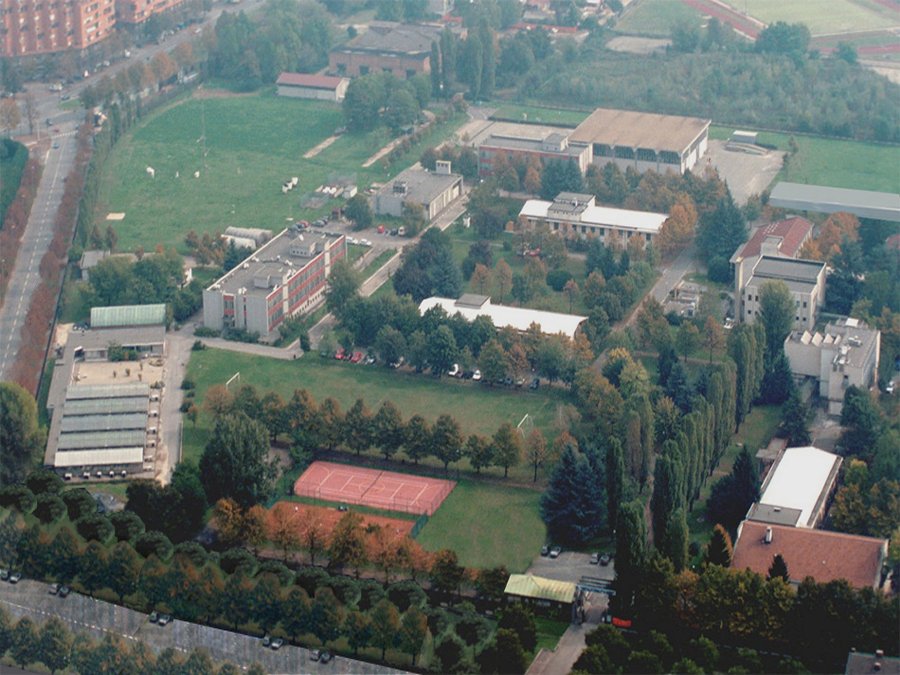
CNR research area in Torino
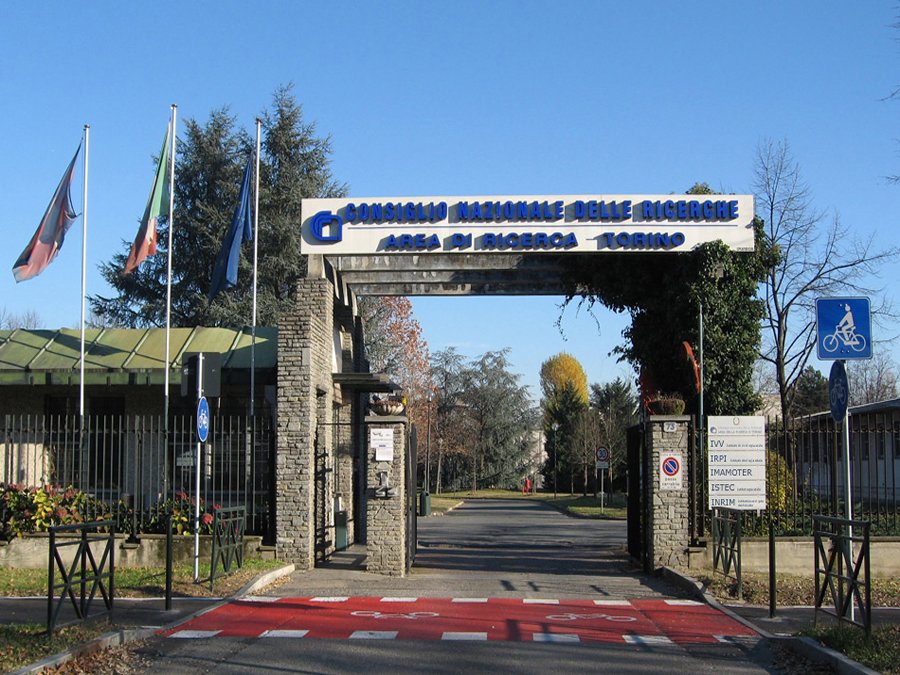
CNR research area main entrance
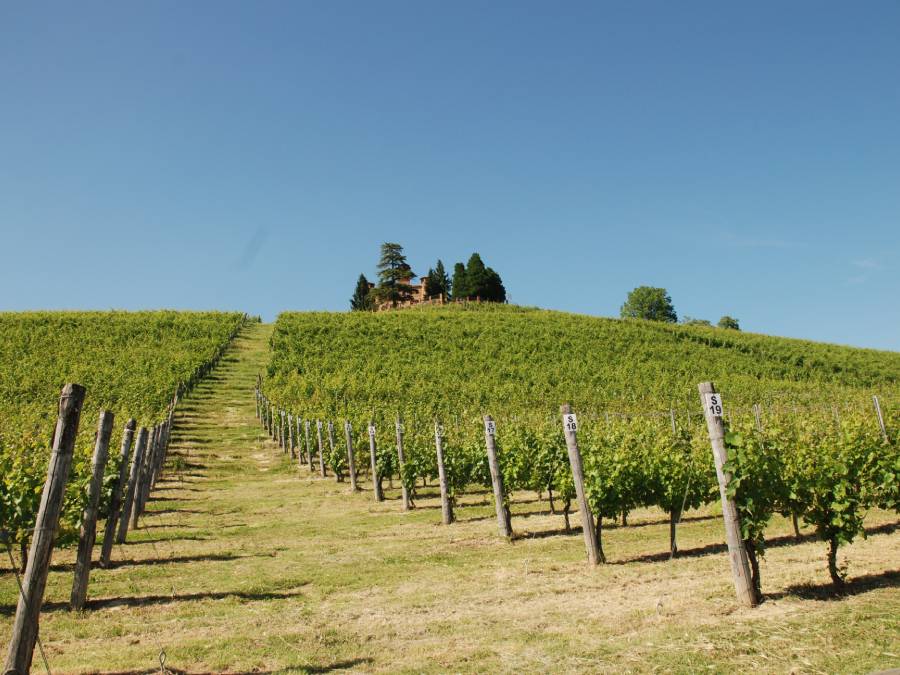
Grinzane Cavour grapevine germplasm collection vineyard
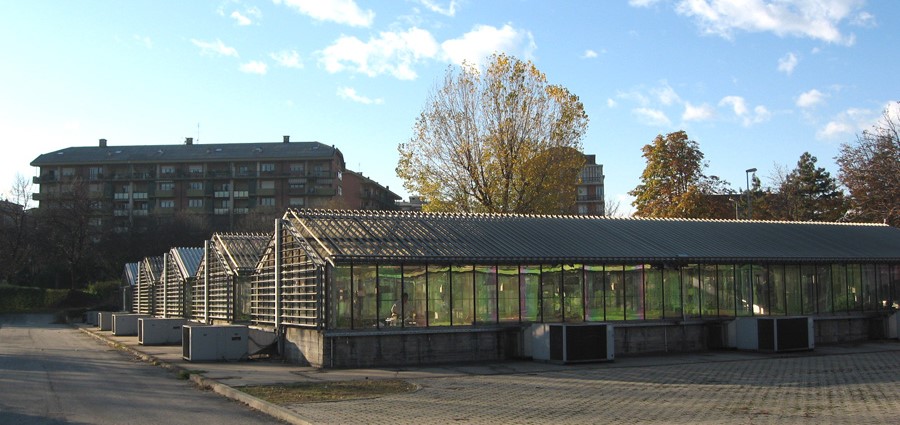
CNR greenhouse facilities
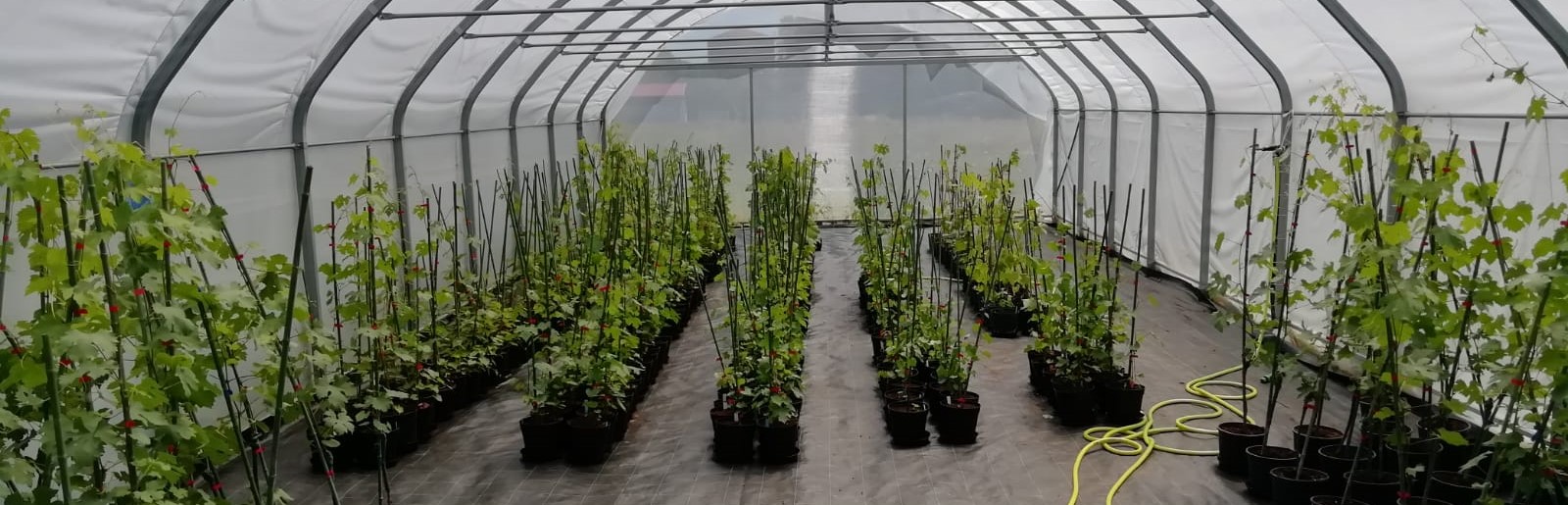
CNR screehouse facility