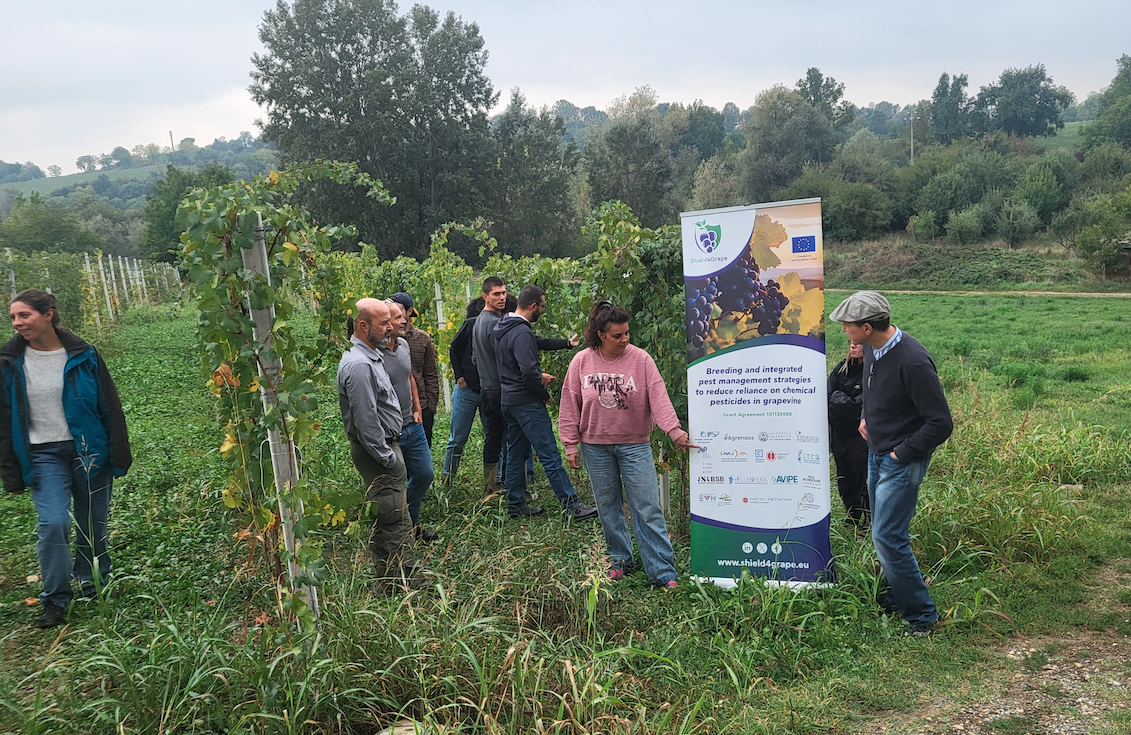
On 8 October, participants visited the Bonafous experimental vineyard in Chieri, northwestern Italy, to discover new grapevine somaclones selected for their potential tolerance to water stress and fungal diseases.
Established in 2024, the vineyard includes young somaclones derived from five grape varieties: Nebbiolo, Chardonnay, Moscato Bianco, Dolcetto and Bragat Rosa. Participants observed their growth and development, including their satisfactory performance on their own roots, without grafting onto rootstocks.
During the 2026 growing season, an integrated disease management strategy was implemented on the somaclones, with 50% fewer phytosanitary treatments against downy and powdery mildew than in the conventional programme applied to susceptible control varieties. No noticeable differences in disease symptoms were observed between the two groups. However, exceptionally dry conditions and low disease pressure prevented a reliable assessment of the somaclones’ actual tolerance. Further evaluations under higher disease pressure will therefore be needed to confirm these preliminary findings.
Participants expressed strong interest in somaclonal selection, particularly its potential to improve tolerance to environmental stresses while preserving the genetic background and varietal identity of traditional grape cultivars.
From disease-resistant grapevine varieties and IPM strategies to alternative plant protection products and new grapevine somaclones, the 2026 field training activities provided opportunities to share knowledge about the different approaches being investigated across Shield4Grape demonstration farms.
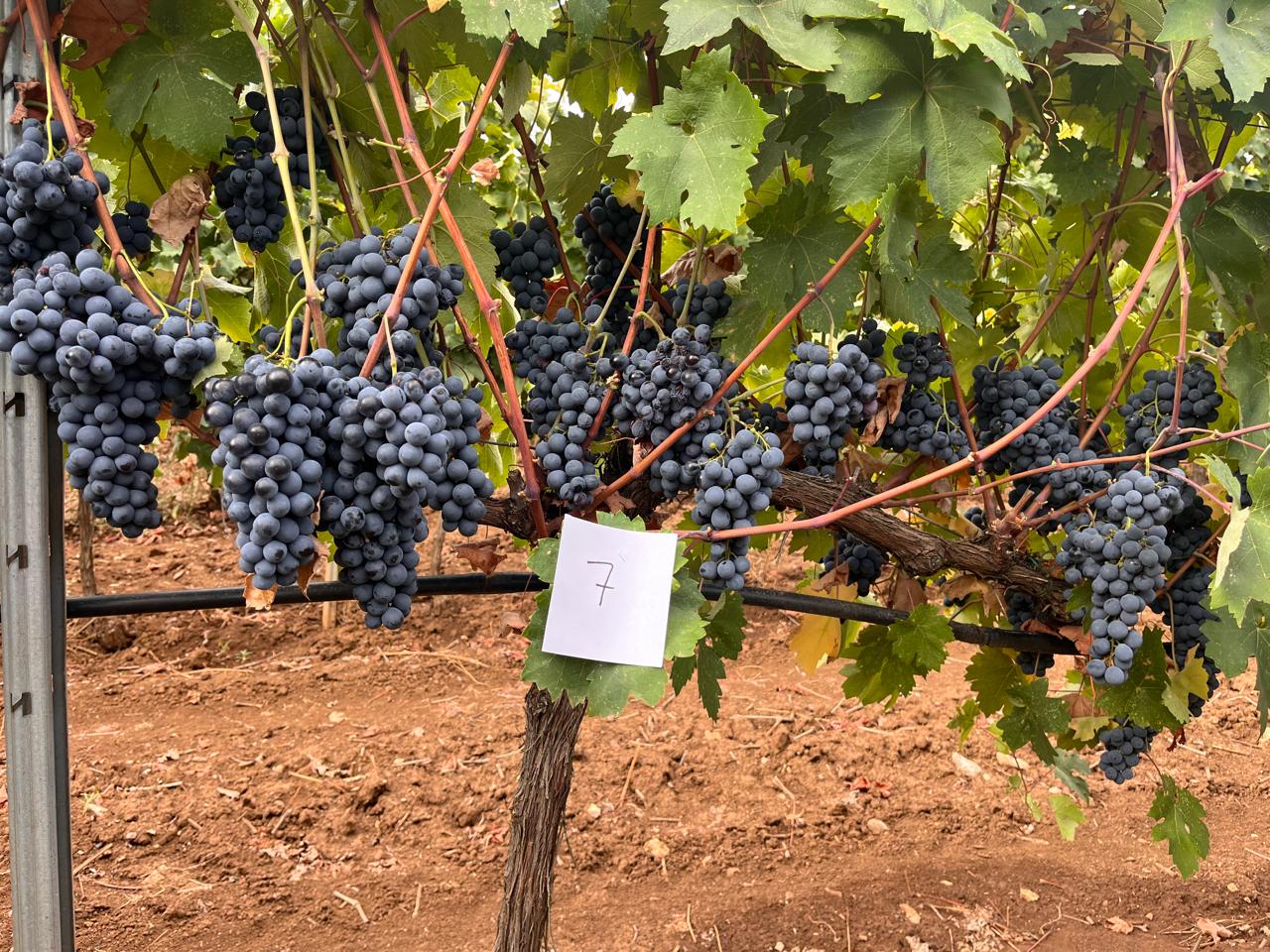
On 28 August and 18 September, our Greek partner Hellenifera organised two events [...]
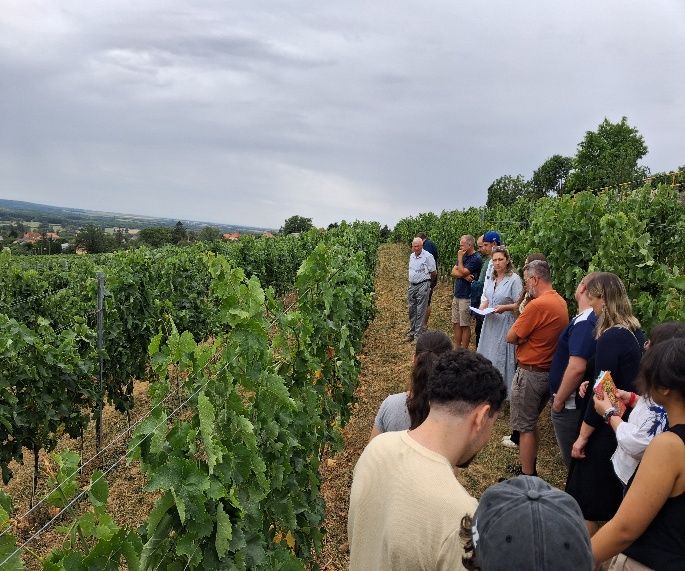
Our journey continues in Hungary, Spain and France, where field [...]
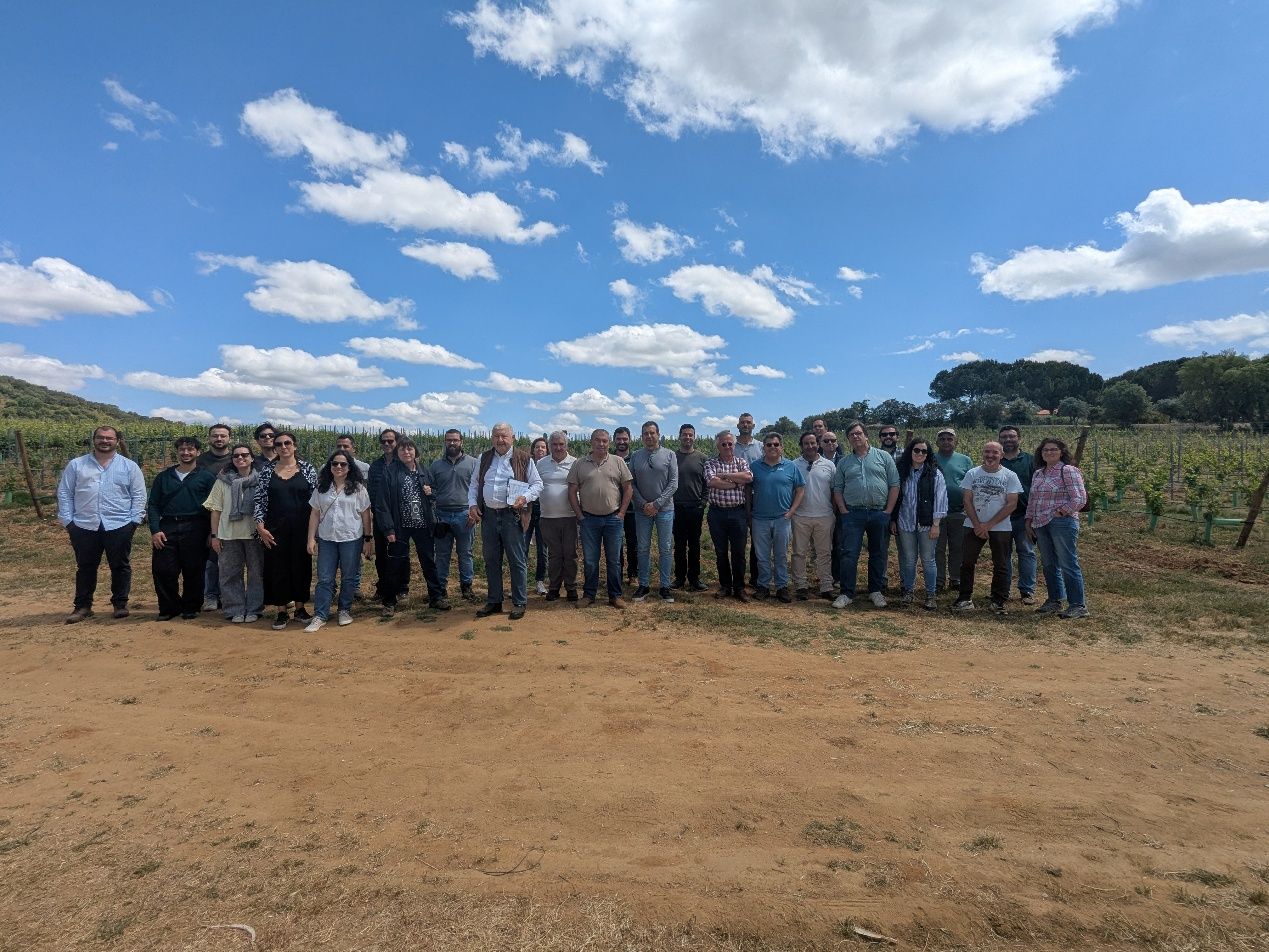
Shield4Grape project partners organised field training and demonstration activities across [...]
-
On 28 August and 18 September, our Greek partner Hellenifera organised two events [...]
-
Our journey continues in Hungary, Spain and France, where field [...]